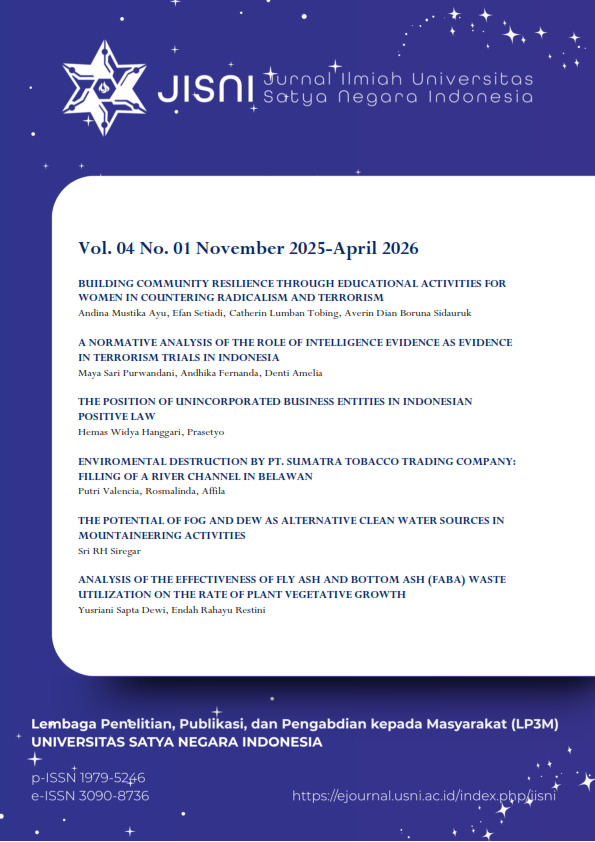
BUILDING COMMUNITY RESILIENCE THROUGH EDUCATIONAL ACTIVITIES FOR WOMEN IN COUNTERING RADICALISM AND TERRORISM
DOI:
https://doi.org/10.59134/jisni.v4i1.74Keywords:
Community Resilience, Women's Education, Radicalism and TerrorismAbstract
This study attempts to describe educational activities for women that have a positive contribution as a strategy to prevent the spread of radicalism and terrorism. Efforts to combat terrorism in Indonesia to date still leave much to be desired. Government programs such as deradicalization and disengagement have not shown satisfactory results and cannot be considered effective measures to prevent radicalism. Based on the brief description of the background above, this study aims to describe how women's education programs can be used as a measure to prevent radicalism and terrorism and to describe why women's education activities can make a positive contribution to increasing community resilience to the spread of radicalism. The method used in this study is a qualitative method with a case study approach. Through women's education activities, the researcher attempts to see how mothers and women play a very important role in the family in educating and preventing the development of radicalism.
References
[1] Aji, I. S. (2001). Terorisme dan HAM Dalam Terorisme: Tragedi Umat Manusia. Jakarta: O.C Kaligis & Associates.
[2] Alius, S. (2017). Terorisme Menyasar Generasi Muda. Terorisme Menyasar Generasi Muda.
[3] Anwar, D. F. (2004). Demokrasi, Keamanan dan Peranan MIliter. Jakarta: LIPI.
[4] AR, M. Q. (2015, Juni 12). Rethinking Peran Perempuan Dalam Keluarga. Karsa Vol 23 No 1, hal. 16-35.
[5] Arikunto, S. (2002). Prosedur Penelitian. Jakarta: PT. Rineka Cipta.
[6] Bakry, U. S. (2016). Metode Penelitian Hubungan Internasional. Yogyakarta: Pustaka Pelajar.
[7] BBC. (2016, mei 29). Sekolah ibu untuk cegah penyebaran radikalisme. Diambil kembali dari Sekolah ibu untuk cegah penyebaran radikalisme: https://www.bbc.com/indonesia/berita_indonesia/2016/05/160524_indonesia_lapsus_radikalisme_sekolah_ibu
[8] Firmansyah, H. (2011). Upaya Penanggulangan Tindak Pidana Terorisme di Indonesia. Mimbar Hukum, 237-439.
[9] Garner, b. (1990). Black's Law Dictionary With Pronunciations 6th edition. West Publishing Co.
[10] Grothberg, E. H. (2000). Resilience for Today: Gaining Strength (Rev. Ed) . Amerika Serikat: Greenwood Publishing Group .
[11] Hendroprioyono, A. (2009). Terorisme: Fundamentalis Kristen, Yahudi dan Islam. Jakarta: Buku Kompas.
[12] Hulukati, W. (2015). PERAN LINGKUNGAN KELUARGA TERHADAP PERKEMBANGAN ANAK. MUSAWA, Vol. 7 No.2.
[13] Ibrahim, D. &. (2010). Pembingkaian Metafora dan Isu Terorisme: Satu Interpretasi Konseptual. jurnal Coverage, 34.
[14] Marsus, B. (2016, 06 02). Kiblat . Diambil kembali dari Kiblat Website: https://www.kiblat.net
[15] Masyhar, A. (2009). Gaya Indonesia Menghadang Terorisme. Bandung: CV Mandar Maju.
[16] Mockaitis, T. R. (2007). The "new" Terrorism: Myths and Reality. Preager Security International, 2.
[17] Mohindra, M. G. (1993). A Historical Heritage, Terorist Games Nations Play. new delhi: pvt ltd.
[18] Moleong, L. J. (2007). Metodologi Penelitian Kualitatif. Bandung: Remaja Rosda Karya.
[19] Monita, Y. (2008). Faktor-Faktor Terjadinya Tindak Pidana Terorisme dan Strategi Penanggulangannya di Indonesia. Forum Akademika vol 18 no 2, 20-34.
[20] Mubyarto. (1991). Etos Kerja dan Kohesi Sosial. Yogyakarta: Aditya Media.
[21] Mulyana, D. (2003). Metode Penelitian Kualitatif. Bandung: Remaja Rosdakarya.
[22] Musjtari, D. N. (2016, Maret 26). Universitas Muhammadiyah Yogyakarta. Diambil kembali dari UMY Website: http://respitory.umy.ac.id
[23] Nugroho, R. (2008). Gender dan Pengarusutamanya di Indonesia. Yogyakarta: Pustaka Pelajar.
[24] Nurhayati, E. (2012). Psikologi Perempuan dalam Berbagai Perspektif . Yogyakarta: Pustaka Pelajar.
[25] Omar, A. J. (2008). Defining and Theorizing Terrorism: A Global Actor-Centered Approach. Journal of World-Systems Research, Volume 14, Number 2, 91-118.
[26] Philips, V. J. (2003). Isu Terorisme dan Human Security, Implikasi Terhadap Studi Kebijakan Keamanan Global. Jurnal Ilmu Politik FISIP UI, 1-10.
[27] Purnomo, A. (2009). Ideologi Kekerasan; Argumentasi Teologis-Sosial Radikalisme Islam. Yogyakarta:: Pustaka Pelajar.
[28] Qodir, Z. (2014). Radikalisme Agama di Indonesia. Yogyakarta:: Pustaka
[29] Sandler, T. (2005). Collective Versus Unilateral Responses to Terrorism. Public Choice Vol 124, 75-93.
[30] Saranani, H. (2018, oktober 29). academia. Diambil kembali dari academia website: www.academia.edu
[31] Siebert, A. (2005). The Resiliency Advantage: Master Change, Thrive Under Pressure, and Bounce Back from Setbacks . Portland: Berret-Koehler Publishers.
[32] Sugiyono. (2009). Metodo Penelitian Kuantitatif dan Kualitatif Dan R&D. Bandung: Alfabeta.
[33] Sugiyono. (2010). Memahami Penelitian Kualitatif. Bandung.
[34] Suprayitno, T. (2010). Sosiologi Pendidikan. Yogyakarta: Sukses Offset: Sukses Offset.
[35] Thahir, M. (2016, January 28). Peran Keluarga dalam Mencegah Faham Radikal. Diambil kembali dari Peran Keluarga dalam Mencegah Faham Radikal: https://www.muslimat-nu.com/peran-keluarga-dalam-mencegah-faham-radikal/
[36] University, C. (2008). Cambridge Advanced Leraners Dictionary,. Cambridge University Press.
[37] Wahid, A. (2004). Kejahatan Terorisme, Perspektif Agama, HAM dan Hukum. Bandung : Refika Aditama.
[38] Wirawan, I. B. (2012). Teori-Teori Sosial Dalam Tiga Paradigma. Jakarta: Kencana.
[39] Wulandari, D. (2018, 10 10). Apa-itu-Radikalisme-docx. Diambil kembali dari scribd: www.scribd.com
[40] Yantri Maputr, N. A. (2016). KETAHANAN KELUARGA: PERSPEKTIF BUDAYA BATOBO. Padang: Universitas Andalas Padang.
[41] Yin, R. (2009). Case Study Research: Design and Methods. London: Sage Publication.
[42] Yunan, A. m. (2004). Paradigma Pendidikan Universal di Era Modern dan Post Modern . Yogyakarta: Ircisod.
Downloads
Published
Issue
Section
License
Copyright (c) 2026 Andina Mustika Ayu, Efan Setiadi, Catherin Lumban Tobing

This work is licensed under a Creative Commons Attribution-NonCommercial-ShareAlike 4.0 International License.